ETIAS 2026: Who Needs It, Cost, How to Apply
The EU's new travel authorisation goes live in Q4 2026. Here is who needs ETIAS, what it costs, how to apply, and what it does not do.
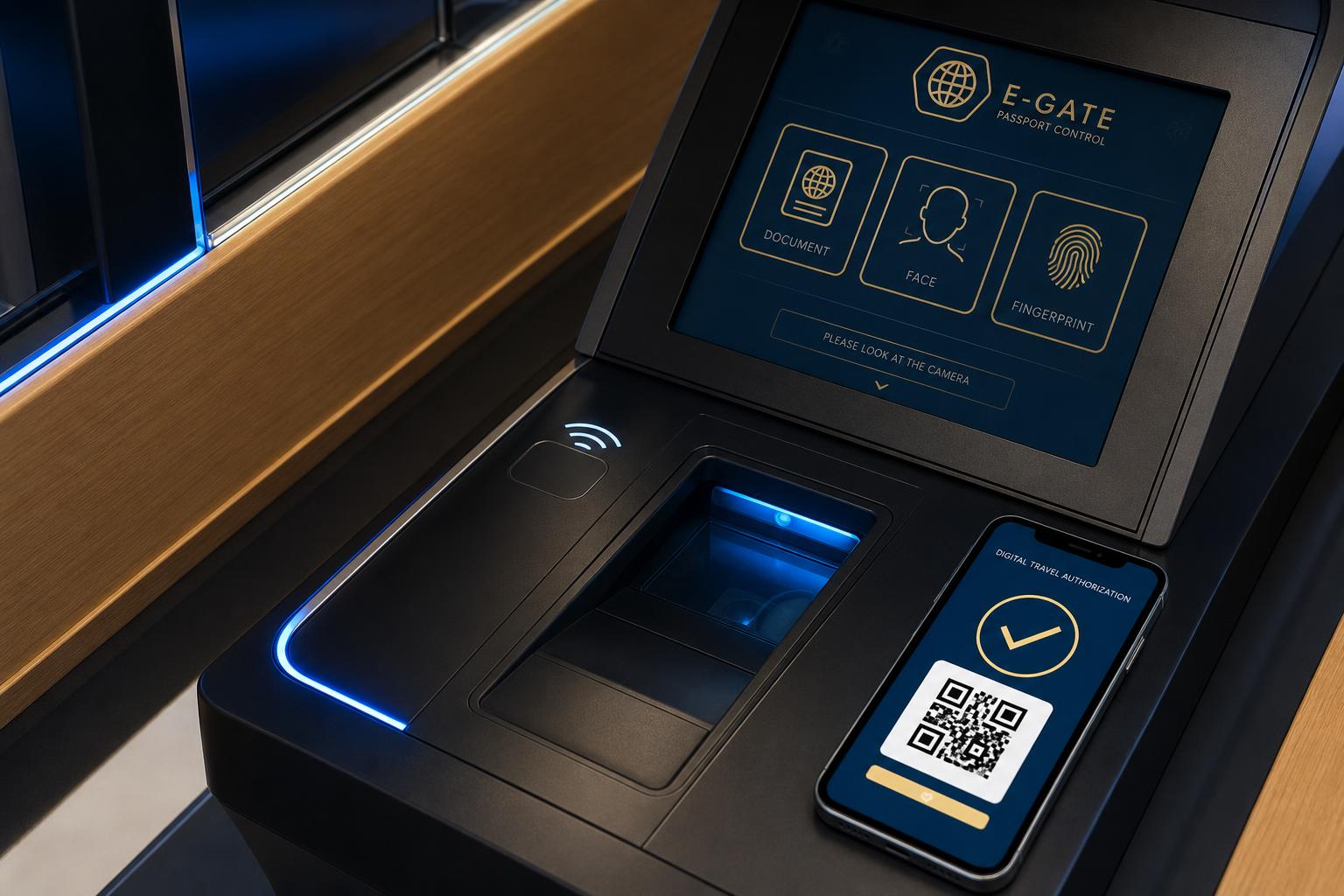
The European Travel Information and Authorisation System — ETIAS — is the EU's new pre-travel security screening for visa-exempt visitors. After years of postponements, the European Commission has confirmed that ETIAS becomes operational in the final quarter of 2026, following the successful rollout of the biometric Entry/Exit System (EES) in April 2026. If you hold a passport from a visa-exempt country and you plan to travel to Europe from late 2026 onward, ETIAS will affect you.
Not sure if you need ETIAS or a full Schengen visa? ETIAS only covers visa-exempt nationalities (US, UK, Canada, Australia, Japan, Brazil, and ~55 others). If you hold a passport from India, the Philippines, Pakistan, Nigeria, or any other visa-required country, ETIAS does not apply to you — you need a Schengen Type C visa. See the 2026 Schengen visa requirements →
This guide brings together the official rules — drawn from Regulation (EU) 2018/1240, the European Commission's travel-europe portal, and Frontex's operational documentation — into a single plain-English brief.
01Key takeaways
- Launch window: Q4 2026, after the EES has stabilised and the 6-month transitional grace period ends.
- Cost: €20 per applicant aged 18 to 70 (set by Commission Delegated Regulation (EU) 2025/1411 of 16 July 2025 amending Regulation 2018/1240). Free for everyone under 18 or over 70.
- Validity: Three years, or until the passport expires — whichever comes first.
- Processing: A decision in minutes for ~95% of applicants. Up to 96 hours when a manual review is triggered, and up to 30 days if additional documents are requested.
- ETIAS is NOT a visa. It is an automated travel authorisation that pre-screens visa-exempt travellers; it does not grant the right to enter, work, or reside.
02What ETIAS actually is
ETIAS was created by Regulation (EU) 2018/1240 and is operated centrally by Frontex (the European Border and Coast Guard Agency) on behalf of the Schengen states. It is an automated IT system that cross-checks every applicant's data against EU security, migration, and public-health databases (SIS, VIS, Eurodac, Europol, Interpol SLTD/TDAWN, EES, and the ETIAS watchlist) before the trip begins.
In other words, ETIAS does for visa-exempt travellers what a consular interview does for visa-required ones: it shifts the security check from the border to before the flight is boarded.
03Official timeline
The European Commission's published sequence is:
- April 2026 — Entry/Exit System (EES) goes live at every external Schengen border. Biometric fingerprints and facial images replace passport stamps.
- Q4 2026 — ETIAS becomes operational. Carriers begin checking for a valid ETIAS at boarding.
- +6 months transitional period — Travellers without ETIAS are not refused boarding solely on that basis under the transitional rules. However, airlines may begin checking ETIAS at boarding from day one to avoid carrier liability and fines for transporting non-compliant passengers — apply before your trip regardless of the grace period.
- End of the transitional period — ETIAS becomes strictly mandatory. No ETIAS, no boarding.
04Who needs ETIAS
ETIAS applies to nationals of the roughly 60 countries currently visa-exempt for short stays in the Schengen Area. That list includes — among others — United States, United Kingdom, Canada, Australia, New Zealand, Japan, South Korea, Singapore, Brazil, Argentina, Mexico, UAE (Emirati nationals), Israel, and most of Latin America.
You do not need ETIAS if you are:
- A national of any EU, EEA, or Swiss country.
- A holder of a valid long-stay visa (Type D) or residence permit issued by a Schengen state.
- A holder of a local border traffic permit, diplomatic passport in certain categories, or a recognised refugee travel document issued by a Schengen state.
- A family member of an EU/EEA/Swiss citizen travelling with that citizen and holding a valid residence card under Directive 2004/38/EC.
If your passport requires a Schengen visa today, ETIAS is irrelevant to you — you continue to apply for a Schengen visa as you do now.
Visa-required passport? If you hold an Indian, Philippine, Pakistani, Nigerian, or other visa-required passport, ETIAS does not apply — you need a full Type C Schengen visa with cover letter, itinerary, finances, and insurance. Build your Schengen visa file free →
05ETIAS vs. Schengen visa
| Feature | ETIAS Travel Authorisation | Schengen Visa (Type C) |
|---|---|---|
| Eligibility | Nationals of ~60 visa-exempt countries | Nationals of visa-required countries |
| Cost | €20 proposed, pending final EU confirmation (free under 18 / over 70) | €90 adult, €45 children 6–12 |
| Validity | Up to 3 years (or passport expiry) | Single, double, or multiple entry; up to 5 years for established travellers |
| Max stay | 90 days in any 180-day period | 90 days in any 180-day period |
| Where you apply | Online only (travel-europe.europa.eu/etias) | Consulate / VFS / TLScontact appointment |
| Processing time | Minutes for most; up to 96 hours / 30 days for review | 15–45 calendar days typically |
| Documents required | Passport + online form only | Full file: cover letter, itinerary, finances, insurance, ties |
| Refusal rate | Expected to be very low (security-based) | Global average ~16%, see why visas get rejected |
| Biometrics | None at application (EES captures on arrival) | Yes, at appointment |
06Fee & validity architecture
The European Commission set the ETIAS fee at €20 via Commission Delegated Regulation (EU) 2025/1411 of 16 July 2025, raised from the original €7 in Regulation 2018/1240. The fee is payable online by card at the end of the application and is non-refundable, whether the application is approved or refused.
Exemptions (no fee at all):
- Applicants under 18 on the date of application.
- Applicants over 70 on the date of application.
- Family members of EU/EEA/Swiss citizens benefiting from free-movement rights.
A granted ETIAS is valid for three years from issue, or until the passport expires — whichever comes first. When you renew your passport, you must apply for a new ETIAS; authorisations are tied to the specific passport number used in the application.
07How to apply
The only official channel is the European Commission portal: travel-europe.europa.eu/etias (and the official ETIAS mobile app published by Frontex). Be prepared to provide:
- Biographical data (full name, date and place of birth, nationality, parents' first names).
- Passport details (number, issue and expiry dates, issuing country).
- Contact details (home address, email, phone).
- Trip details (Member State of first intended entry).
- Education and current occupation.
- Background questions (criminal convictions in the last 10 years for serious offences, recent stays in conflict zones, prior expulsion or refusal of entry from any EU state).
The system does not collect biometrics at application time — those are captured on arrival at the border by EES.
Decision timing (official targets):
- ~95% of applications receive an automated decision within minutes.
- Manual review by the ETIAS National Unit of a Member State: up to 96 hours.
- Additional information or interview requested: up to 30 days total.
08Countries covered
A valid ETIAS is required to enter any of the following 30 European countries: Austria, Belgium, Bulgaria, Croatia, Cyprus*, Czechia, Denmark, Estonia, Finland, France, Germany, Greece, Hungary, Iceland, Italy, Latvia, Liechtenstein, Lithuania, Luxembourg, Malta, Netherlands, Norway, Poland, Portugal, Romania, Slovakia, Slovenia, Spain, Sweden, and Switzerland. *Cyprus is included as the EU phases it into the Schengen perimeter.
Ireland is not part of ETIAS — it maintains a separate immigration regime under the Common Travel Area with the UK.
09System boundaries — what ETIAS does NOT do
- It does not guarantee entry. Border officers retain full discretion at the external border and can still refuse admission.
- It does not override the 90/180 rule. Each entry is counted by EES against your rolling 180-day window — see our Schengen processing times and entry rules guide.
- It grants no right to work, study long-term, or reside.
- It is not transferable between passports or persons.
10Appeals & refusals
The most common refusal grounds will be: a passport flagged as lost or stolen, a SIS alert for refusal of entry, prior EU overstay or expulsion, a positive hit on the ETIAS watchlist, or inconsistent background-question answers.
When refused, the ETIAS Central Unit notifies the applicant of which Member State processed the file and on what grounds. The legal appeal is filed against that Member State, under that state's national administrative law, within the deadline stated in the refusal notice. Refused applicants may also re-apply at any time if the underlying grounds change (for example, a lost-passport alert lifted).
11ETIAS and the 90/180 rule
ETIAS does not change the headline limit: short-stay travellers may spend a maximum of 90 days in any rolling 180-day period across the entire Schengen Area. What changes is enforcement. EES will calculate the count automatically on every entry and exit, and ETIAS pre-screening means the system already knows you are arriving. The era of "the officer didn't notice the stamp" is over. For a worked example of how the 90/180 window is calculated, see our Schengen processing times and entry rules guide.
Track your rolling window. Enter your past Schengen trips into our free 90/180 Day Calculator to see days used, days remaining, and your earliest legal re-entry date.
12Scam prevention
Within hours of ETIAS being announced, dozens of look-alike paid portals appeared promising "expedited" or "premium" ETIAS. They are not official. They re-enter your data into the real EU portal, charge you €60–€90 on top of the official fee, and sometimes mis-key fields that cause refusals.
The only legitimate channels are:
- travel-europe.europa.eu/etias — the European Commission portal.
- The official ETIAS mobile app published by Frontex on the App Store and Google Play.
Anything else — including ads that show up above the official result on search engines — is an intermediary at best and a scam at worst.
13Final word
ETIAS is a small piece of paperwork with large operational consequences. For the visa-exempt traveller it adds a small fee, a few minutes online, and one more thing to remember when the passport is renewed. For visa-required travellers it changes nothing — the 2026 Schengen visa requirements and the most common refusal reasons still apply exactly as before. If you are weighing where to file, our breakdown of the easiest Schengen country to get a visa from is the right starting point.
Frequently asked questions
- When exactly does ETIAS go live?
- The European Commission has confirmed Q4 2026 as the operational start, following the rollout of the Entry/Exit System (EES) in April 2026. A 6-month transitional grace period applies; after that, carriers must verify a valid ETIAS before boarding.
- How much does the ETIAS application cost?
- €20, payable online by card at the end of the application. The fee is non-refundable whether the request is approved or refused.
- Do children under 18 have to pay the ETIAS fee?
- No. Applicants under 18 and over 70 on the date of application are completely exempt from the €20 fee, but they still need an approved ETIAS to travel.
- Is ETIAS a visa?
- No. ETIAS is an automated travel authorisation, not a visa. It pre-screens visa-exempt travellers against EU security databases. It does not grant the right to enter — that decision rests with the border officer — and does not allow work or residence.
- If I hold an Indian or Philippine passport but live in the UK/UAE, do I apply for ETIAS?
- No. ETIAS is tied to nationality, not residence. Indian and Philippine passport holders are visa-required for the Schengen Area regardless of where they live, so they continue to apply for a standard Type C Schengen visa.
- How long is a single approved ETIAS valid for?
- Up to three years from the date of issue, or until the underlying passport expires — whichever comes first. Within that window you may make multiple short trips, each subject to the 90/180 rule.
- What happens if my passport expires before my ETIAS does?
- The ETIAS becomes invalid the moment the passport it is linked to expires. After renewing the passport you must submit a new ETIAS application — there is no automatic transfer.
- How far in advance of my European flight should I apply for ETIAS?
- At least 96 hours before departure. About 95% of applications are decided in minutes, but manual reviews can take up to 96 hours and complex cases up to 30 days, so applying weeks ahead is the safe default.
Related guides
- Requirements · 12 min readSchengen Visa Requirements 2026: Complete Checklist
Updated requirements across all 29 Schengen states, including the new ETIAS rollout and biometric enrollment changes.
- Guides · 11 min readSchengen Visa Cover Letter: Sample, Format & Template (2026)
A full covering letter sample for a Schengen visa, the one-page format officers expect, and the exact template our generator uses to compile files.