Schengen Visa from Iran
An embassy-ready application file — cover letter, day-by-day itinerary, applicant profile, and personalised checklist — formatted for the standards Iranian applicants are graded on.
How Iranian applicants apply for a Schengen visa
Applications are submitted through Schengen consulates in Ankara, Yerevan, or Dubai (routing varies).
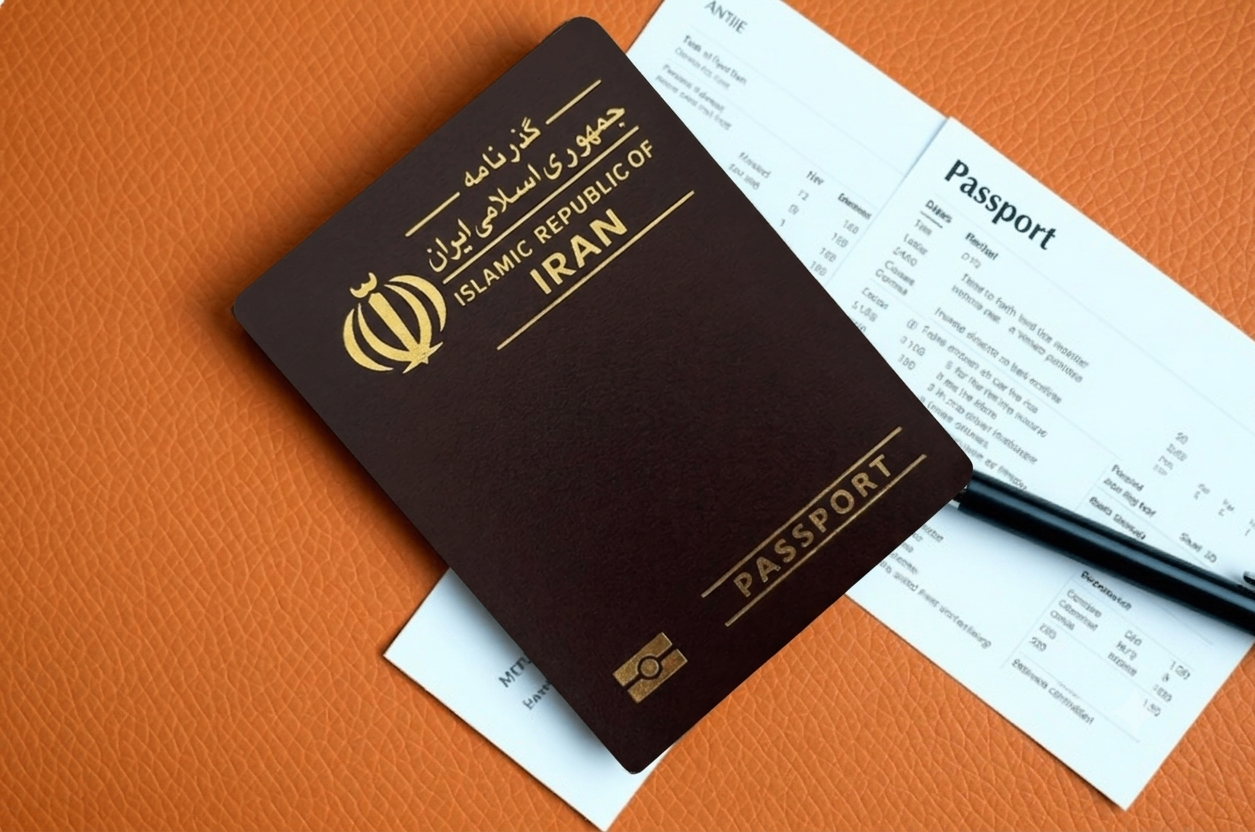
Final documents are written in formal English regardless of the language you fill the form in — the register Schengen consulates expect to read.
This guide covers short-stay Schengen visas (Type C, up to 90 days). For longer stays you need a national long-stay (Type D) visa issued by your destination country.
What's inside your visa file
- Formal cover letter
Structured paragraph by paragraph in the register consulates expect, naming the destination mission and trip purpose.
- Day-by-day itinerary
Dated plan with hotels, intercity transit, and overnight counts that match the consulate of application.
- Applicant profile
Employment, ties, and prior travel summarised in the format reviewers scan for first.
- Personalised checklist
Every supporting document the file needs, including the country-specific ones flagged for your situation.
Top Schengen destinations from Iran
Schengen refusal rates for applicants in Iran (2025)
In 2025, Schengen consulates in Iran took 104,957 short-stay decisions and refused 29.1% — above the worldwide rate of 14.6%.
| # | Schengen state | Refusal rate | Decisions | Consulates |
|---|---|---|---|---|
| 1 | Romania | 16.6% | 692 | Teheran |
| 2 | Switzerland | 17.5% | 5,746 | Teheran |
| 3 | Bulgaria | 18.7% | 945 | Teheran |
| 4 | Hungary | 24.4% | 1,610 | Teheran |
| 5 | France | 25.3% | 26,553 | Teheran |
| 6 | Germany | 25.7% | 17,125 | Teheran |
| 7 | Finland | 26.1% | 1,723 | Teheran |
| 8 | Netherlands | 26.2% | 8,234 | Teheran |
| 9 | Spain | 31.0% | 13,463 | Teheran |
| 10 | Denmark | 31.6% | 1,679 | Teheran |
| 11 | Greece | 33.2% | 4,414 | Teheran |
| 12 | Belgium | 36.9% | 2,084 | Teheran |
| 13 | Poland | 38.7% | 811 | Teheran |
| 14 | Sweden | 38.8% | 4,059 | Teheran |
| 15 | Italy | 40.7% | 13,082 | Teheran |
| 16 | Austria | 46.2% | 1,332 | Teheran |
The gap between the lowest and highest refusal rate in Iran is 29.6 percentage points — Romania refused 16.6% of the decisions it took, Austria refused 46.2%.
Source: European Commission — Schengen visa statistics for consulates, 2025. Refusal rate = not issued ÷ decisions taken (uniform visas issued + LTVs issued + not issued). Short-stay (uniform) Schengen visas only. Excludes national long-stay visas. Figures are keyed by country of application — where the consulate sits — not applicant nationality. Applying to the consulate with the best odds is only allowed when it is the state of your main destination — jurisdiction rules come first.
What Iranian applicants need to get right
Iranian passport holders face the most complicated consular routing of any major applicant population. Several Schengen embassies in Tehran have reduced services or closed entirely over recent years, and applicants are routinely directed to consulates in Ankara (Türkiye), Yerevan (Armenia), Dubai (UAE), or Tbilisi (Georgia) depending on the destination country and the moment in time. Consulate availability for Iranian passport holders changes frequently — verify current operating status directly with the relevant embassy before booking flights or appointments.
Beyond routing, Iranian applicants face additional administrative scrutiny: longer processing windows, more frequent requests for supplementary documentation, and security checks that can extend a standard 15-day decision into 6–12 weeks. The file itself has to absorb this reality — every document needs to reconcile cleanly with every other document, every financial source needs a documented origin, and the cover letter has to name a specific consulate and a specific purpose without ambiguity.
SchengenDoc generates the formal English-language cover letter, day-by-day itinerary, and personalised checklist Iranian applicants need at whichever consulate is currently accepting their file. The file translates input from Persian or any other language into the formal register Schengen consulates expect, names the host consulate explicitly, frames the purpose precisely (tourism, student, family visit, conference), and flags the Iran-specific documents — sanctions-compliant bank statements, employment letters, proof of accommodation outside Iran during the application window if applying abroad — that round out a defensible file.
Frequently asked questions
For a full personalised document list, use our free checklist builder.
- Which Schengen consulates accept Iranian passport holders and where are they located?
- Routing varies by destination and changes frequently. Germany typically accepts applications in Tehran, Ankara, and Istanbul. France routes through Tehran when operating, otherwise Ankara or Dubai. The Netherlands has periodically directed Iranian applicants to Ankara. Italy and Spain accept files in Tehran when consular services are open. Consulate availability for Iranian passport holders changes frequently — verify current operating status directly with the relevant embassy before booking.
- What additional security checks apply to Iranian applicants?
- Iranian files routinely undergo extended administrative processing that adds 4–10 weeks on top of the standard 15-day decision window. The consulate may request additional documentation (employment verification, source of funds, detailed travel history) at any point during this period. Build a generous buffer between application and travel — 10–12 weeks minimum is realistic. Consulate availability for Iranian passport holders changes frequently — verify current operating status directly with the relevant embassy before booking.
- How should students and researchers frame their cover letter differently from tourists?
- Students and researchers should lead the cover letter with the academic purpose, name the institution and host professor or conference, attach the admission or invitation letter as the central evidence, and frame return intent around an enrolled programme in Iran (or elsewhere) rather than employment. Tourist files instead lead with the itinerary, hotel bookings, and self-funded budget. Mixing the two — tourism framing with a research-conference invitation in the file, or vice versa — is a common cause of refusal.
- What financial documentation is expected — Iranian bank accounts vs. foreign accounts?
- Consulates accept both, but foreign-currency accounts held in the UAE, Türkiye, Armenia, or Europe typically read more cleanly because the funds are immediately accessible for the trip and not subject to currency controls. Iranian rial statements remain valid evidence but should be paired with a cover-letter explanation of the conversion path and supported by any foreign-currency holdings. Whichever you submit, document the source — salary, business income, savings — over 3–6 months.
- How does travel history (or lack of it) affect Iranian applicants?
- A blank passport is not by itself a refusal reason, but for Iranian applicants prior travel to OECD-aligned destinations (UK, US, Canada, Australia, Japan, South Korea) materially strengthens the file because each previous visa-compliant trip evidences return intent. Travel limited to Türkiye, the UAE, or other visa-on-arrival destinations is neutral. First-time applicants compensate with stronger employment, financial, and family-tie documentation in the file.
- What are the most common rejection reasons specific to Iranian applicants?
- Three patterns dominate. First, documentation that doesn't reconcile — bank statements showing balances the salary doesn't explain, or itineraries that don't match the visa category claimed. Second, weak return-intent evidence — applicants documented as recently unemployed, recently divorced, or with no immediate family remaining in Iran face higher refusal odds. Third, applying to the wrong consulate — a German file lodged in Yerevan when the main destination is France, for example. A clean, internally consistent file with a precise cover letter is the single largest controllable factor.
- Do I need real flight tickets to apply?
- No — a paid, non-refundable ticket is not required. Consulates accept a verifiable flight reservation (a live PNR in the airline's system). Consulates widely flag unverifiable dummy PDFs, and immigration advisors report PNR verification is standard practice at many missions. Submitting an unverifiable reservation can trigger refusal under Article 32(1)(a)(i) of the Visa Code (false or unreliable documents) or Article 32(1)(a)(ii) (purpose and conditions of stay not justified). Best practice is a hold-the-fare reservation or a refundable booking kept live until the decision. The SchengenDoc file produces the day-by-day itinerary document that accompanies — not replaces — your real reservation. See why dummy tickets get rejected.
Helpful guides for Iranian applicants
- Schengen visa cover letter — sample & templateFree covering letter sample plus the one-page format officers expect.
- Day-by-day Schengen visa itinerary templateNights-per-country rule, 7/14/21-day samples, and the format VFS scans first.
- Flight itinerary for visa applicationReservation vs ticket, dummy tickets, and the consulate-by-consulate stance.
- Why Schengen visas get rejectedThe Annex VI refusal codes and the file-level fix for each.
- Schengen visa bank statement — what consulates checkMonths required, stamping rules, and the deposits that trigger refusal.
- Employment letter / NOC for Schengen visaTemplate, salary disclosure, and what self-employed applicants substitute.
Related country guides
Same region or similar consular routing as Iran.