Schengen Visa from Australia
An embassy-ready application file — cover letter, day-by-day itinerary, applicant profile, and personalised checklist — formatted for the standards Australia-based applicants are graded on.
How Australia-based applicants apply for a Schengen visa
Applications are submitted through VFS Global Australia.
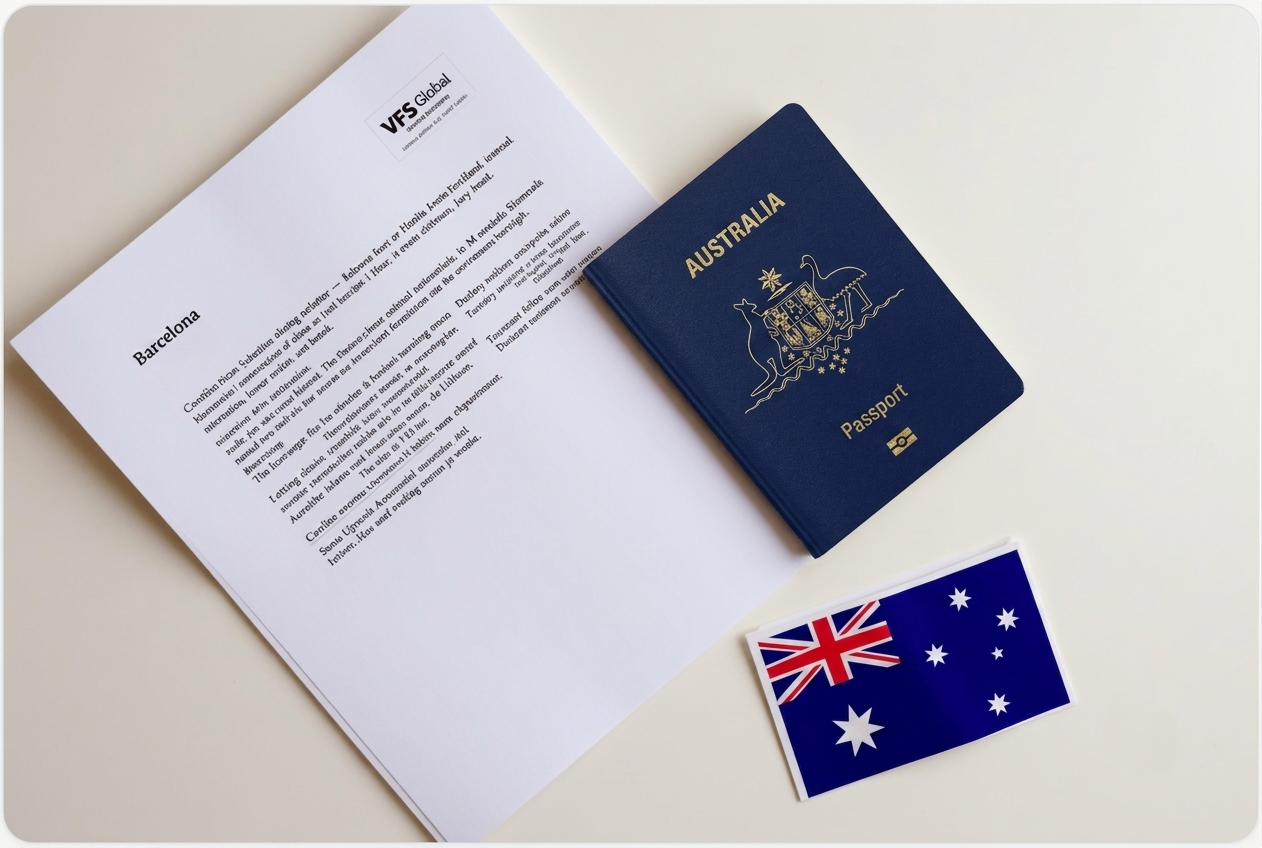
What's inside your visa file
- Formal cover letter
Structured paragraph by paragraph in the register consulates expect, naming the destination mission and trip purpose.
- Day-by-day itinerary
Dated plan with hotels, intercity transit, and overnight counts that match the consulate of application.
- Applicant profile
Employment, ties, and prior travel summarised in the format reviewers scan for first.
- Personalised checklist
Every supporting document the file needs, including the country-specific ones flagged for your situation.
Top Schengen destinations from Australia
Schengen refusal rates for applicants in Australia (2025)
In 2025, Schengen consulates in Australia took 19,145 short-stay decisions and refused 3.0% — below the worldwide rate of 14.6%.
| # | Schengen state | Refusal rate | Decisions | Consulates |
|---|---|---|---|---|
| 1 | Austria | 0.6% | 4,707 | Canberra |
| 2 | Switzerland | 0.6% | 1,215 | Sydney |
| 3 | Greece | 0.7% | 1,052 | Sydney, Melbourne, Perth, Adelaide, Canberra |
| 4 | Italy | 1.4% | 3,809 | Sydney, Melbourne, Perth, Adelaide, Canberra, Brisbane |
| 5 | Spain | 1.5% | 1,304 | Sydney, Melbourne, Canberra |
| 6 | France | 4.8% | 3,012 | Sydney, Canberra |
| 7 | Netherlands | 8.8% | 2,082 | Sydney |
The gap between the lowest and highest refusal rate in Australia is 8.2 percentage points — Austria refused 0.6% of the decisions it took, Netherlands refused 8.8%.
Source: European Commission — Schengen visa statistics for consulates, 2025. Refusal rate = not issued ÷ decisions taken (uniform visas issued + LTVs issued + not issued). Short-stay (uniform) Schengen visas only. Excludes national long-stay visas. Figures are keyed by country of application — where the consulate sits — not applicant nationality. Applying to the consulate with the best odds is only allowed when it is the state of your main destination — jurisdiction rules come first.
What Australia-based applicants need to get right
Australian citizens travelling to the Schengen area for short stays under 90 days don't currently need a visa for tourism or business, but a large share of Australia-based applicants do — temporary skilled-visa holders, international students, and Australian PRs from non-visa-exempt nationalities route their Schengen applications through VFS Global centres in Sydney, Melbourne, Brisbane, Perth, and Canberra. The consulate you apply to is determined by your main destination by nights spent, not by which centre has the earliest appointment.
Two issues dominate refusals out of Australia. The first is status documentation that doesn't clearly cover the trip: your Australian permanent or temporary visa needs to remain valid for at least three months beyond your planned return, and your residential address on Medicare, payslips, and ATO records must reconcile. The second is the financial story — Australian incomes mix PAYG salary, super contributions, ABN contractor invoices, and bonuses, and consulates expect a cover letter and itinerary that tie those AUD credits to the daily budget of the trip at a realistic euro rate.
From the last quarter of 2026, Australian passport holders travelling visa-free will need an ETIAS travel authorisation (€20, valid up to three years, applied for on the EU's official portal travel-europe.europa.eu/etias) before boarding — it is not a visa and does not apply to Schengen visa applications. A SchengenDoc file produces the formal cover letter, day-by-day itinerary, and personalised checklist Australia-based Schengen applicants need at VFS Global Sydney or Melbourne, with the checklist flagging the Australian-specific documents — VEVO check, Australian visa grant notice, ATO Notice of Assessment, and the last three months of Australian bank statements — so nothing is missed at the appointment.
Frequently asked questions
For a full personalised document list, use our free checklist builder.
- Do Australian citizens need a Schengen visa?
- No. Australian passport holders can enter the Schengen area visa-free for up to 90 days in any 180-day period for tourism or business. From the last quarter of 2026, Australians will need an ETIAS travel authorisation before boarding (€20, valid up to 3 years, applied for on the EU's official portal travel-europe.europa.eu/etias) — it is not a visa. Schengen visa applications from Australia are submitted by temporary residents and PRs on passports that require a visa for the Schengen area.
- Where do I apply for a Schengen visa in Australia?
- Most missions route through VFS Global in Sydney, Melbourne, Brisbane, Perth, and Canberra. France, Italy, Germany, Spain, and the Netherlands also operate consular sections in Sydney and Canberra. Always apply to the consulate of your main destination by nights spent — applying to an easier centre when you're clearly flying into Paris or Rome is grounds for refusal.
- How long does my Australian visa need to be valid for a Schengen application?
- Most consulates require your Australian visa or permanent residency to be valid for at least three months beyond your planned date of return from the Schengen area. Applying when your visa is closer to expiry significantly raises the risk of refusal regardless of the rest of the file. A VEVO check printout dated within the last month is the standard proof.
- Do I need an ATO Notice of Assessment for a Schengen visa from Australia?
- Yes, for salaried applicants the standard expectation includes the most recent ATO Notice of Assessment alongside the last three to six months of payslips and an employer letter on Australian letterhead confirming role, salary, and approved leave dates. Self-employed applicants with an ABN attach the business registration and the last two NOAs.
- Do I need real flight tickets to apply?
- No — a paid, non-refundable ticket is not required. Consulates accept a verifiable flight reservation (a live PNR in the airline's system). Consulates widely flag unverifiable dummy PDFs, and immigration advisors report PNR verification is standard practice at many missions. Submitting an unverifiable reservation can trigger refusal under Article 32(1)(a)(i) of the Visa Code (false or unreliable documents) or Article 32(1)(a)(ii) (purpose and conditions of stay not justified). Best practice is a hold-the-fare reservation or a refundable booking kept live until the decision. The SchengenDoc file produces the day-by-day itinerary document that accompanies — not replaces — your real reservation. See why dummy tickets get rejected.
Helpful guides for Australia-based applicants
- Schengen visa cover letter — sample & templateFree covering letter sample plus the one-page format officers expect.
- Day-by-day Schengen visa itinerary templateNights-per-country rule, 7/14/21-day samples, and the format VFS scans first.
- Flight itinerary for visa applicationReservation vs ticket, dummy tickets, and the consulate-by-consulate stance.
- Why Schengen visas get rejectedThe Annex VI refusal codes and the file-level fix for each.
- Schengen visa bank statement — what consulates checkMonths required, stamping rules, and the deposits that trigger refusal.
- Employment letter / NOC for Schengen visaTemplate, salary disclosure, and what self-employed applicants substitute.
Related country guides
Same region or similar consular routing as Australia.