Schengen Visa from Kazakhstan
An embassy-ready application file — cover letter, day-by-day itinerary, applicant profile, and personalised checklist — formatted for the standards Kazakhstani applicants are graded on.
How Kazakhstani applicants apply for a Schengen visa
Applications are submitted through VFS Global Almaty & Astana (Germany, Italy, France, Czechia and others) · German embassy Astana for some categories.
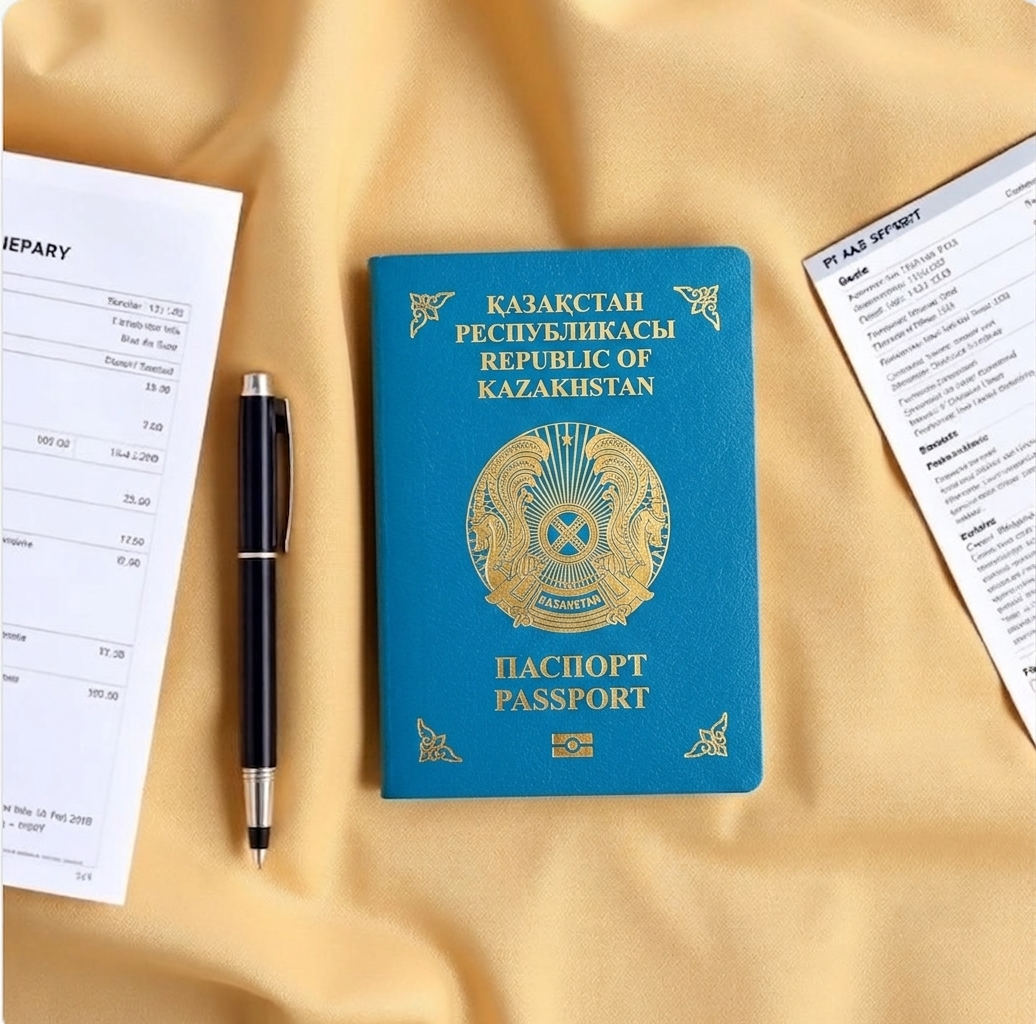
Final documents are written in formal English regardless of the language you fill the form in — the register Schengen consulates expect to read.
This guide covers short-stay Schengen visas (Type C, up to 90 days). For longer stays you need a national long-stay (Type D) visa issued by your destination country.
What's inside your visa file
- Formal cover letter
Structured paragraph by paragraph in the register consulates expect, naming the destination mission and trip purpose.
- Day-by-day itinerary
Dated plan with hotels, intercity transit, and overnight counts that match the consulate of application.
- Applicant profile
Employment, ties, and prior travel summarised in the format reviewers scan for first.
- Personalised checklist
Every supporting document the file needs, including the country-specific ones flagged for your situation.
Top Schengen destinations from Kazakhstan
Schengen refusal rates for applicants in Kazakhstan (2025)
In 2025, Schengen consulates in Kazakhstan took 179,758 short-stay decisions and refused 9.1% — below the worldwide rate of 14.6%.
| # | Schengen state | Refusal rate | Decisions | Consulates |
|---|---|---|---|---|
| 1 | Romania | 1.6% | 672 | Astana |
| 2 | Greece | 2.8% | 9,643 | Astana |
| 3 | Poland | 3.8% | 3,626 | Almaty, Astana |
| 4 | Austria | 4.6% | 5,276 | Astana |
| 5 | France | 4.7% | 18,461 | Astana |
| 6 | Bulgaria | 6.3% | 7,305 | Astana |
| 7 | Spain | 6.4% | 24,076 | Astana |
| 8 | Italy | 6.9% | 28,832 | Astana |
| 9 | Latvia | 7.1% | 2,174 | Astana |
| 10 | Croatia | 7.3% | 1,238 | Astana |
| 11 | Hungary | 7.5% | 10,213 | Almaty |
| 12 | Slovakia | 10.1% | 1,040 | Astana |
| 13 | Estonia | 10.4% | 875 | Astana |
| 14 | Germany | 11.8% | 37,524 | Almaty, Astana |
| 15 | Switzerland | 12.3% | 4,272 | Astana |
| 16 | Lithuania | 16.9% | 8,752 | Almaty, Astana |
| 17 | Czechia | 19.6% | 13,850 | Astana |
| 18 | Finland | 20.5% | 1,908 | Astana |
The gap between the lowest and highest refusal rate in Kazakhstan is 18.9 percentage points — Romania refused 1.6% of the decisions it took, Finland refused 20.5%.
Source: European Commission — Schengen visa statistics for consulates, 2025. Refusal rate = not issued ÷ decisions taken (uniform visas issued + LTVs issued + not issued). Short-stay (uniform) Schengen visas only. Excludes national long-stay visas. Figures are keyed by country of application — where the consulate sits — not applicant nationality. Applying to the consulate with the best odds is only allowed when it is the state of your main destination — jurisdiction rules come first.
What Kazakhstani applicants need to get right
Kazakhstani applicants submit Schengen short-stay applications through VFS Global centres in Almaty and Astana — both cities handle a large share of national volume, with Almaty servicing southern Kazakhstan and Astana the north. Germany and Italy handle the largest shares of Kazakhstani Schengen applications, driven by business travel, conference attendance, and a substantial Kazakhstani-German diaspora. France and Czechia follow.
Business travel sits at the centre of Kazakhstani Schengen demand. A large share of applications are for trade fairs, supplier meetings, and corporate visits in the oil, finance, and industrial sectors. These files turn on three documents: a formal invitation letter from the inviting company in Schengen, an employer letter or business registration from the Kazakhstani side, and bank statements (KZT or USD) that show salary or business credits consistent with the trip narrative. Family-visit applications follow the same logic with a Verpflichtungserklärung (Germany) or attestation d'accueil (France) replacing the corporate invitation.
SchengenDoc generates the formal cover letter, day-by-day itinerary, and personalised checklist Kazakhstani applicants need at VFS Almaty or Astana. The file names the host consulate, frames the invitation correctly (Verpflichtungserklärung, attestation d'accueil, or business invitation), references the KZT or USD financial expectations consulates assess against, and flags the Kazakhstan-specific documents — employer letter, three months of pay slips, business registration where applicable, and stamped bank statements — that consulates expect to see lined up against the itinerary.
Frequently asked questions
For a full personalised document list, use our free checklist builder.
- Where do Kazakhstani applicants submit Schengen applications?
- VFS Global operates centres in both Almaty and Astana, processing applications for Germany, Italy, France, Czechia, and several other missions. The German embassy in Astana handles some categories directly. Apply to the consulate of your main destination by nights spent — applying to an easier consulate when your itinerary is clearly elsewhere is grounds for refusal.
- What documents do Kazakhstani business travellers need?
- A formal invitation letter from the inviting Schengen company on letterhead naming meeting dates, purpose, and which side covers travel and accommodation; your employer's invitation letter or NOC; the Kazakhstani company's registration; three months of pay slips or salary credits visible on bank statements; and the itinerary matched to the host consulate. For trade fairs, attach the registration confirmation.
- What sponsorship document is needed for family visits to Germany?
- A Verpflichtungserklärung (formal declaration of commitment) signed by your host in Germany at the local Ausländerbehörde (foreigners' office), not a private letter. It includes the host's proof of income, accommodation, and identity. The Verpflichtungserklärung is mailed to you in original form and submitted with the rest of your file at VFS Almaty or Astana.
- What financial proof is expected in tenge?
- Three to six months of bank statements in KZT (or USD for foreign-currency accounts), stamped by the issuing branch, showing salary or business credits consistent with the cover letter and closing balances that cover the trip cost. Avoid large unexplained deposits in the 30 days before applying — that reads as funds borrowed for the visa and weakens the file.
- How far in advance should appointments be booked at VFS Almaty or Astana?
- The legal window opens 180 days before departure and closes 15 working days before. In practice book the slot 6–10 weeks ahead for most missions and 10–12 weeks ahead for German, French, and Italian applications in peak summer. The appointment, not the paperwork, is what runs out first.
- What if I apply from Almaty but live in Astana, or vice versa?
- VFS operates in both cities and most missions let you choose either centre regardless of where you live in Kazakhstan. A handful of missions apply territorial routing (south of the country → Almaty, north → Astana) — check the destination mission's VFS page before booking. If you choose the centre that doesn't match your residence, bring your residence registration so the file is consistent.
- What are the most common rejection reasons for Kazakhstani applicants?
- Annex VI codes 2 (purpose of stay not justified) and 9 (intention to leave not established) drive most refusals. For business travel, the invitation letter not matching the stated purpose is the dominant cause — a generic invitation paired with a tourist-shaped itinerary reads as inconsistent. For younger and unmarried applicants, weak return-intent evidence (no documented employment, property, or dependents in Kazakhstan) is the second leading cause. See our Uzbek applicant guide if you're comparing routes across Central Asia.
- Do I need real flight tickets to apply?
- No — a paid, non-refundable ticket is not required. Consulates accept a verifiable flight reservation (a live PNR in the airline's system). Consulates widely flag unverifiable dummy PDFs, and immigration advisors report PNR verification is standard practice at many missions. Submitting an unverifiable reservation can trigger refusal under Article 32(1)(a)(i) of the Visa Code (false or unreliable documents) or Article 32(1)(a)(ii) (purpose and conditions of stay not justified). Best practice is a hold-the-fare reservation or a refundable booking kept live until the decision. The SchengenDoc file produces the day-by-day itinerary document that accompanies — not replaces — your real reservation. See why dummy tickets get rejected.
Helpful guides for Kazakhstani applicants
- Schengen visa cover letter — sample & templateFree covering letter sample plus the one-page format officers expect.
- Day-by-day Schengen visa itinerary templateNights-per-country rule, 7/14/21-day samples, and the format VFS scans first.
- Flight itinerary for visa applicationReservation vs ticket, dummy tickets, and the consulate-by-consulate stance.
- Why Schengen visas get rejectedThe Annex VI refusal codes and the file-level fix for each.
- Schengen visa bank statement — what consulates checkMonths required, stamping rules, and the deposits that trigger refusal.
- Employment letter / NOC for Schengen visaTemplate, salary disclosure, and what self-employed applicants substitute.